Sports-Related Muscle Soreness Relief in Tucson, AZ
Our licensed massage therapists combine sports recovery massage, deep tissue work, cupping and assisted stretching in one plan built around your training.

- 4.9 Stars From 430 Google Reviews
- Licensed Massage Therapists
- Sports And Medical Massage
- Serving Tucson And Marana
What Sports-Related Muscle Soreness Is
Most soreness after training is delayed onset muscle soreness, or DOMS: tiny strain in muscle fibers after work they are not used to, such as downhill running, heavy lifting or a longer ride than usual. It starts 12 to 24 hours later, peaks around day two or three and usually fades within about five days.
Delayed Soreness
Stiff, tender muscles a day or two after a new or harder session.
Overuse Tightness
Tension that builds over weeks of repeated training without enough recovery.
Acute Strain
Sudden, sharp pain during activity, often with swelling. See a doctor first.
Signs Your Soreness Needs Hands-On Care
Normal DOMS fades on its own. Book a session when soreness keeps coming back or starts to change how you move.
- Soreness that lasts longer than a week after training
- Tight calves, hamstrings or hips that shorten your stride
- Knots in the neck, shoulders or upper back after lifting or throwing
- Warm-ups that take longer every week to loosen you up
- Muscles that feel locked up after a race, tournament or long ride
- An event coming up and legs that never feel fresh
When to See a Doctor First
Get medical care before massage if you have sudden sharp pain, a pop at the moment of injury, swelling or bruising, numbness or tingling, weakness, pain that stops you from bearing weight, or dark urine after extreme exercise. Massage supports recovery from training load. It does not replace a diagnosis of an injury.
How We Treat Sports Muscle Soreness
Your therapist picks techniques for the muscles you train and where you are in your schedule. Most sessions blend several of these.
Sports Recovery Massage
Firm, rhythmic work on the muscle groups your sport loads hardest, aimed at easing stiffness and restoring range of motion between sessions.
Deep Tissue Massage
Slow, sustained pressure into the deeper layers of muscle for tightness that lighter work does not reach, such as dense quads or a stubborn upper back.
Trigger Point Therapy
Focused pressure on tender knots that can send discomfort to nearby areas, such as a knot in the shoulder felt up into the neck.
Myofascial Release
Gentle, sustained stretch and pressure on the connective tissue around muscles, for the restricted feeling that repetitive training leaves behind.
Cupping Therapy
Suction cups lift the skin and underlying tissue. Many athletes ask for it on the back, shoulders and thighs between hard sessions.
Cross-Fiber Friction
Short strokes across the grain of a muscle or tendon to work on one localized, stubborn spot rather than the whole area.
Assisted Stretching
Your therapist moves you through stretches you cannot reach as well alone, with most attention on hips, hamstrings, calves and shoulders.
Neuromuscular Therapy
Targeted work on the specific muscles behind your pattern of soreness, part of the medical-based massage approach we use for condition-specific plans.
Timing Massage Around Your Training
When you book matters as much as what we do, so the pressure changes with the day.
Pre-Event Massage 1 to 3 days out
Lighter, quicker work that leaves muscles loose without new soreness before you compete.
Post-Event Massage within a day or two
Gentle flushing work after a race, game or tournament, while muscles are tired and deep pressure is unwelcome.
Recovery Days
Deeper work, stretching and cupping on a rest day, when you have time to recover from the session itself.
Maintenance Through the Season
Regular visits in heavy training blocks to catch tightness before it turns into soreness that lingers.
Training in the Tucson heat adds fluid loss to the mix. Drink well before and after your session.


What Athletes Say After Their Sessions
"I had Yves today and if you're an athlete or have sore muscles he's the man for the job. Great conversation and explained what and how he was working on the muscles to get the most out of them."
Joshuah R.Google Review
"She is able to reset muscles I have overused so that I feel the benefits for weeks after treatment. I play tennis, bike, hike and care for a special needs person so I need monthly visits with Rebecca."
Donna B.Google Review
"Andrea Ruiz is incredible and was able to provide deep tissue therapy to relieve my muscle soreness and helped improve my mobility."
Nicholas G.Google Review
"Yves is a magician. He can make your tight sore muscles disappear."
Kip K.Google Review
Rated 4.9 out of 5 across 430 Google reviews
What to Expect at Your First Visit
Every session starts with your training, not a set routine. Some tenderness for a day or two after deep work is common and fades quickly.
- 1
We Talk Through Your Training
Your sport, weekly load, upcoming events and exactly where the soreness sits.
- 2
We Build the Plan
Your therapist explains which techniques fit and confirms the pressure you prefer.
- 3
Your Session
Hands-on work on the problem areas, with pressure checks as we go.
- 4
Aftercare and Next Steps
Simple guidance on movement and fluids, and a schedule that fits your next event.
Recovery Habits Between Sessions
A session goes further when the days around it support recovery. Ask your therapist for stretches that match the work done on your table.
- Keep easy days easy: a walk, a light spin or a swim.
- Drink water before and after training, more in summer.
- Protect your sleep during heavy training weeks.
- Raise mileage and weight gradually rather than in big jumps.
- Warm up before hard efforts and cool down after them.
- Space deep tissue work away from your hardest training days.
Sports Massage Off Oracle Road in Tucson
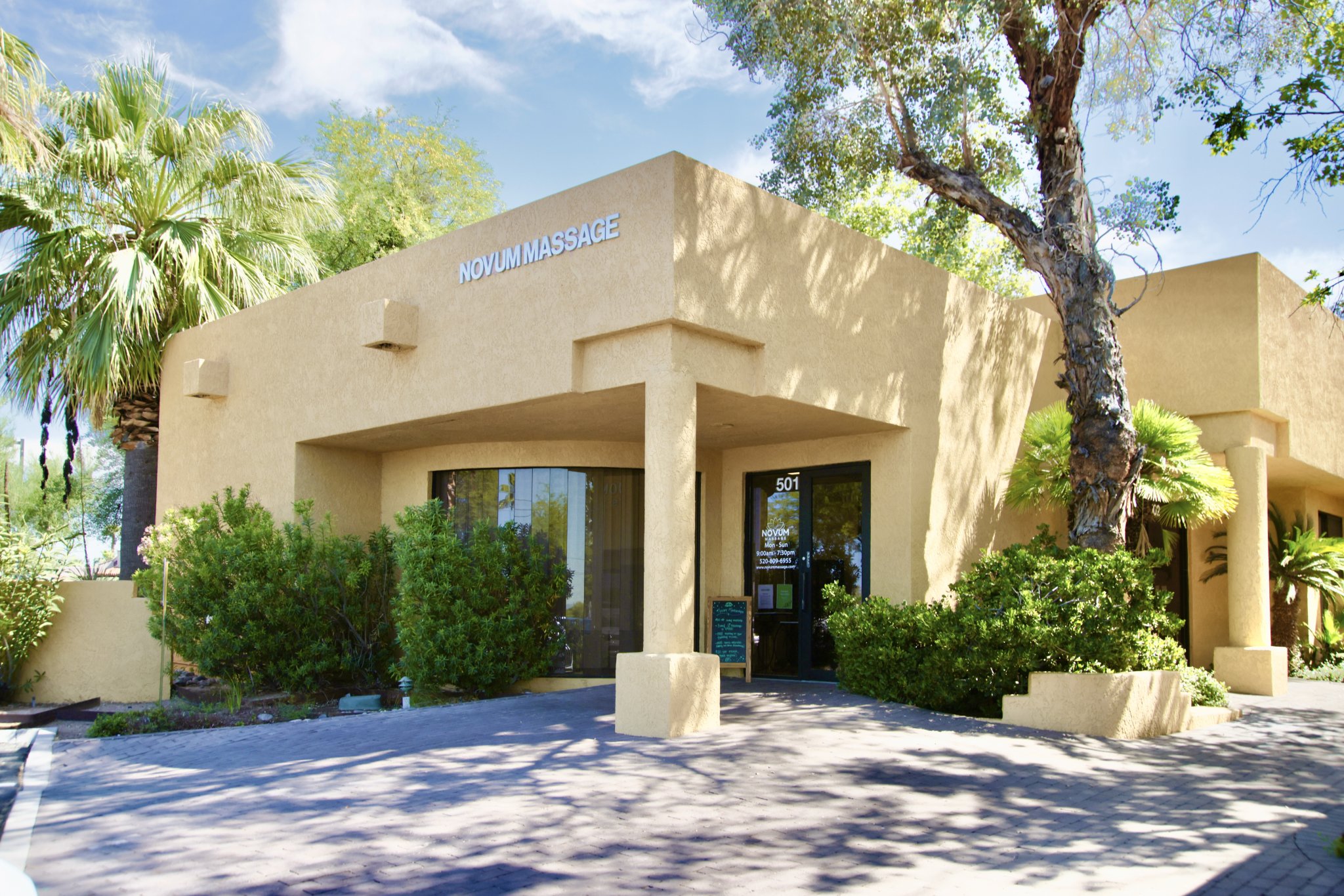
Novum Medical & Sports Massage
6700 North Oracle Road
Tucson, AZ 85704
Phone: (520) 809-6955
Who We See
Runners, cyclists, hikers, lifters, tennis players and weekend athletes from Tucson, Marana, Oro Valley and nearby areas.
Sports Muscle Soreness Questions
How long does sports-related muscle soreness last?
Delayed onset muscle soreness usually starts 12 to 24 hours after a hard or unfamiliar session, peaks around day two or three and fades within about five days. Soreness that lasts longer than a week, keeps returning or gets sharper deserves a closer look.
Should I get a massage while I am sore or wait?
You can come in while sore. Your therapist will use lighter, flushing work when muscles are freshly worked and save deeper pressure for a day when you have recovered a little. Tell us how you trained and when, and we adjust the session to match.
How can I tell soreness from an injury?
Training soreness feels dull and achy, affects both sides or a whole muscle group and eases with gentle movement. Sharp pain, a pop, swelling, bruising, numbness or pain that stops you from bearing weight point to an injury, and a doctor should see it before massage.
How soon before a race or game should I book a massage in Tucson, AZ?
Book a pre-event massage one to three days before you compete, and keep it lighter so your legs feel loose rather than worked. Save deep tissue work for after the event, once the first day or two of recovery has passed.
How often should athletes get a sports massage?
It depends on your training load. Many athletes book every few weeks during heavy training blocks and before key events, and some of our patients who play tennis, cycle and hike come in monthly. Your therapist can suggest a schedule after your first session.
Will I be sore after a deep tissue massage?
Some tenderness for a day or two after deep work is common, much like after a good workout. Drinking water and moving gently that day helps it pass, and you can ask for lighter pressure at any point during the session.
How much does a sports massage session cost?
Cost depends on the session length and the work your plan needs. Contact our team when you book and we will go over session options and payment with you.
Get Back to Training Feeling Fresh
Tell us your sport and your next event, and we will build a session plan around them.