
Stress and Anxiety-Related Tension Relief in Tucson, AZ
Licensed massage therapists who ease the neck, jaw and shoulder tension that stress and anxiety leave behind, in a quiet private room on North Oracle Road.
- 4.9 Stars, 430 Google Reviews
- Licensed Massage Therapists
- Medical & Sports Massage
- Serving Tucson & Marana
How Stress Turns Into Muscle Tension
When you feel stressed or anxious, your body gets ready to react. Muscles in the neck, shoulders, jaw and back tighten, and breathing moves up into the chest.
That bracing is meant to pass. Under steady pressure from work, family, health or worry, it often stays, and muscles held tight for weeks begin to ache, knot and limit how you move.
Stress Switches On
Your nervous system shifts into a ready-to-react state.
Muscles Brace
Shoulders lift, the jaw clenches and the upper back locks.
Tension Feeds Back
Aches and poor sleep add to the stress, so the loop repeats.
Massage works on the muscle side of this loop. It eases held tissue and gives your body an unhurried hour to settle.
Where Stress Settles in Your Body
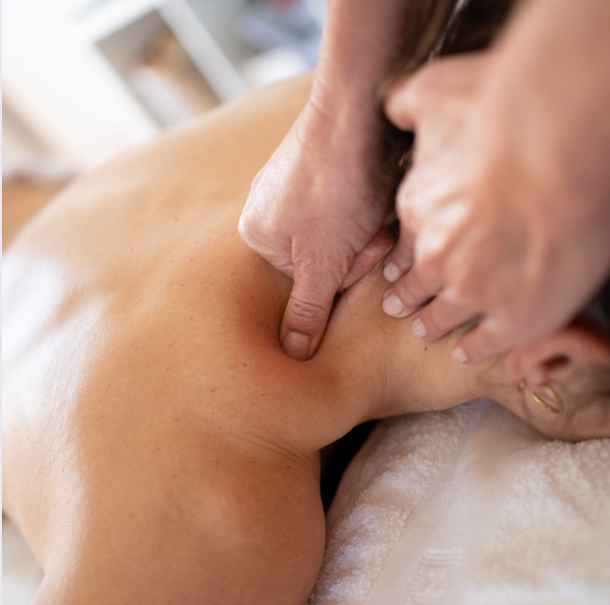
Stress tension rarely stays in one place. Patients often come to us with several of these at once.
- Raised, tight shoulders and a stiff neck
- Tension headaches that start at the base of the skull
- Jaw clenching or teeth grinding, often worse at night
- A knot between the shoulder blades that will not let go
- Shallow breathing and a tight chest or rib cage
- Restless sleep and waking up already sore
When to Seek Medical Care
Massage supports your health, but it does not treat an anxiety disorder or replace care from a physician or mental health professional. Chest pain, trouble breathing, numbness or a sudden severe headache need medical attention first. If you are in crisis, call or text 988 at any time.
Massage Techniques That Ease Stress Tension
Your therapist chooses from our massage services based on where you hold tension and the pressure you can relax into. Most stress sessions blend two or three.
For anxious, wired or overworked days, when the goal is to help your whole body slow down.
Swedish Massage
Long, flowing strokes at an even pace that help the body leave its braced state.
Craniosacral Therapy
Very light, still holds at the head, neck and spine for patients who prefer a gentle touch.
Effleurage
Slow gliding strokes that warm tissue gently and open and close each session.
Lymphatic Drainage Massage
Soft, rhythmic strokes over the skin, often chosen when deeper pressure feels like too much.
For knots and bands that have built up over weeks of stress and no longer let go on their own.
Myofascial Release
Sustained, slow pressure that softens the connective tissue around tight muscles.
Trigger Point Therapy
Focused pressure on knots that send pain elsewhere, such as from the upper back into the head.
Pressure Point Massage
Steady holds on specific points along the neck, shoulders and scalp.
Deep Tissue Massage
Slower, firmer work for dense tension, always at a pressure you agree to.
For the stiffness and posture habits that months of tension leave behind.
Assisted Stretching
Your therapist guides you through stretches for the neck, chest and shoulders that stress shortens.
Neuromuscular Therapy
Targeted work on the muscle imbalances and posture patterns tied to chronic tension.
Cupping Therapy
Gentle suction that lifts tissue across the upper back and shoulders.
Stretching and Joint Mobilization
Easy movement through the neck and shoulders to restore range you have been guarding.
Care From Licensed Massage Therapists
Every session is given by a licensed massage therapist trained in medical and sports massage. Our owner, Lynda, built the clinic as a calm, clean space where patients can truly unwind.
Trained Hands
Licensed therapists who read where your body holds stress.
A Plan for You
Techniques and pressure chosen for your tension, not a set routine.
Medical Massage Focus
The same team that treats pain, injury and sports recovery.
Patients Feel the Difference
Real words from Google reviews by patients who came in carrying stress and tension.
"I arrive stressed and tense and have always left feeling relaxed and refreshed."
"I carry a lot of tension in my neck and shoulders and after she worked on me, not only did I feel more relaxed the circulation in my neck and shoulders were much improved."
"She's excellent at releasing the stress and relaxing the muscles."
"The atmosphere was peaceful which made the experience very enjoyable. I left feeling rejuvenated and stress-free."
★★★★★ 4.9 average across 430 Google reviews. Read more on our testimonials page.
What to Expect at Your Visit
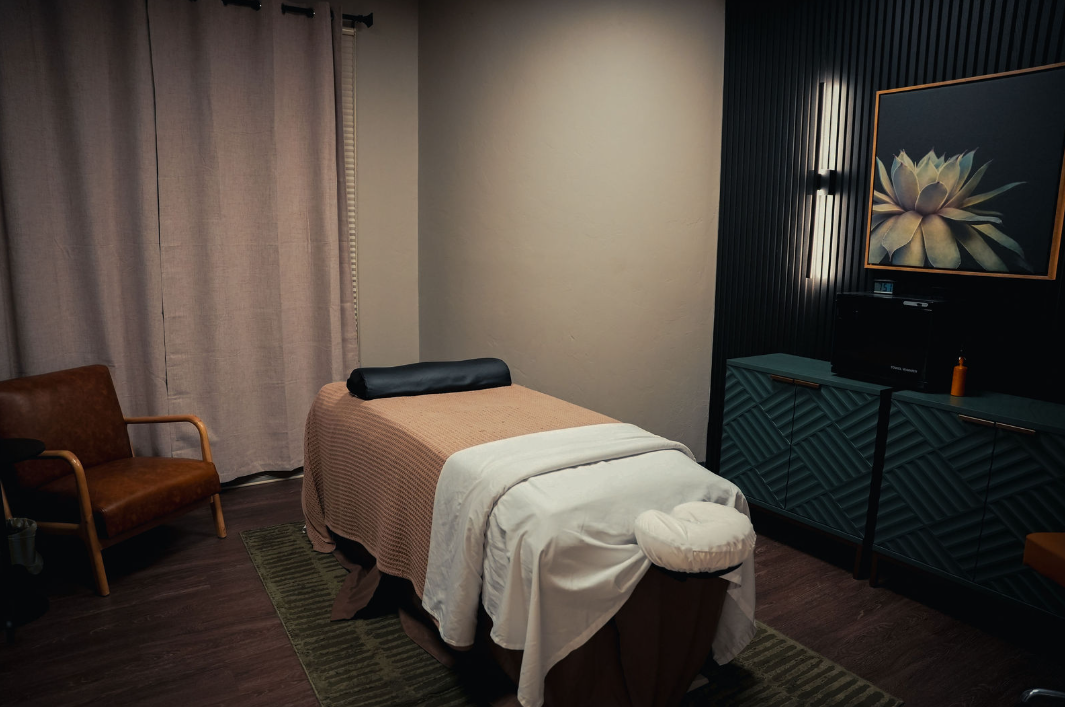
Your first session is shaped around what stress feels like in your body today, in one of our softly lit private rooms.
Tell Us Where You Hold It
Share your tension spots, sleep, headaches, health history and any areas to avoid.
Agree on Pressure and Pace
Gentle, moderate or firm. You can change it at any point.
Hands-On Work in a Quiet Room
Your therapist works the areas you named, often starting at the neck and shoulders.
Ease Back Into Your Day
Drink water, move gently and notice how you sleep that night.
Plan Your Next Step
Your therapist suggests how often to return based on how your body responded.
Stress Tension Questions, Answered
Can massage help with anxiety-related muscle tension?
Yes, for the physical side of it. Massage works on muscles that stay braced under stress, such as the neck, shoulders, jaw and upper back, and many patients say they feel calmer and sleep better after a session. It supports, but does not replace, care for anxiety itself.
What type of massage is good for stress?
There is no single answer. Swedish massage and craniosacral therapy suit people who want a calming, lighter touch, while myofascial release and trigger point therapy target knots that have built up over time. Most of our stress sessions blend two or three techniques.
Should a massage for stress be gentle or deep?
It should be the pressure your body can relax into. Pressure that makes you tense up works against the goal, so your therapist checks in and adjusts during the session. Some patients prefer firm deep tissue work on the shoulders and lighter work everywhere else.
How often should I get a massage for stress in Tucson, AZ?
It depends on how much tension you carry and how quickly it returns. Some patients come in every few weeks during a demanding season, others monthly to keep tension from building. Your therapist will suggest a rhythm after your first visit. We also see patients from Marana and nearby communities.
Can massage help tension headaches and jaw clenching?
Tension headaches often start in tight muscles at the base of the skull, the neck and the upper back, and jaw clenching loads the muscles around the jaw and temples. Your therapist can work these areas directly. A new, sudden or severe headache should be checked by a physician first. See our other conditions we treat.
Is massage a replacement for anxiety treatment?
No. Massage can ease the muscle tension that stress and anxiety create, and it can be a steady, calming part of your routine. Ongoing anxiety, panic attacks or low mood deserve care from a physician or mental health professional, and you can call or text 988 at any time in a crisis.
How much does a stress relief massage cost?
Pricing depends on session length and the techniques in your plan. Our team will walk you through the options, and any HSA, FSA or insurance questions, when you book.
Let Your Shoulders Drop
Tell us where stress shows up in your body. Your plan starts with one appointment.